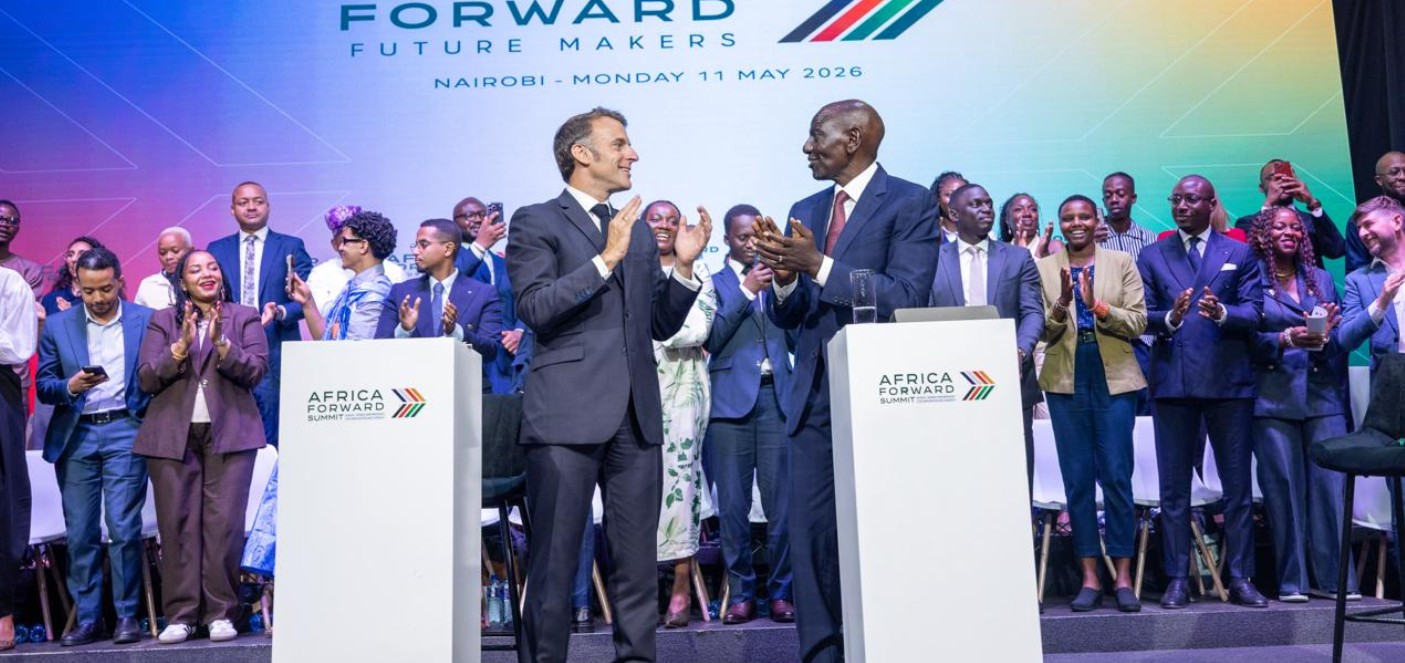
AFRICA stands to gain significantly from the just-concluded Africa Forward Summit in Nairobi, where African leaders, French President Emmanuel Macron, global financiers, business executives and development institutions gathered to reshape economic cooperation between the continent and France. Co-hosted by Kenya and France on 11–12 May 2026, the summit sought to move relations away from aid dependency towards investment, innovation and partnerships built on greater equality. The most eye-catching outcome was the announcement of €23 billion, about $27 billion, in investment commitments for Africa. Of that amount, €14 billion is expected from French companies, while €9 billion will come from African firms and investors. The money is intended to support sectors central to Africa’s future, including energy, agriculture, artificial intelligence, healthcare, infrastructure, culture and creative industries. For Africa, this matters because the continent is seeking capital that can create jobs, expand manufacturing and reduce dependence on raw commodity exports. Investments in agriculture could strengthen food security and agro-processing; artificial intelligence and digital infrastructure could accelerate the continent’s technology ambitions; and healthcare commitments could help narrow service gaps in countries still struggling with underfunded systems. Clean energy emerged as another major gain. More than $11 billion in renewable energy deals were announced, including plans for hydropower, solar, wind, clean cooking and sustainable aviation fuel. These projects could improve electricity access, support industrial growth and help African countries pursue development without simply copying the high-carbon path taken by older industrial powers. The summit also pushed one of Africa’s most urgent economic arguments: that the continent pays too much to borrow. African leaders said global credit-rating systems and perceived risk have made financing unfairly expensive, even when viable projects exist. President Macron backed a first-loss guarantee mechanism designed to reduce investor risk and said he would take the issue to the upcoming G7 summit. If implemented, such reforms could unlock cheaper finance for African infrastructure, businesses and governments. The Nairobi gathering was also important politically. It was the first major France–Africa summit held in an English-speaking African country, signaling France’s attempt to build a wider, less colonial relationship with the continent beyond its traditional Francophone sphere. Kenya’s President William Ruto framed the moment as a shift from extraction and dependency towards “win-win engagements”. The summit’s agenda showed that Africa is no longer approaching global partners only as a recipient of assistance, but as a market, a producer, a diplomatic bloc and a source of innovation. Discussions covered green industrialization, international financial reform, peace and security, agriculture, technology, health, youth and creative industries. Participants included African heads of state, the United Nations Secretary-General, the African Union leadership, international financial institutions and private-sector actors. Still, the real benefit will depend on delivery. Africa has heard grand pledges before. The Nairobi commitments will become meaningful only if they produce factories, power plants, skilled jobs, fair contracts and local value addition rather than another cycle of foreign profits built on African resources. The summit has opened a promising door; African governments must now ensure that the agreements serve citizens, not merely investors. This is an inference from the scale and stated goals of the summit, alongside longstanding concerns about unequal external partnerships.

 AfriFiles