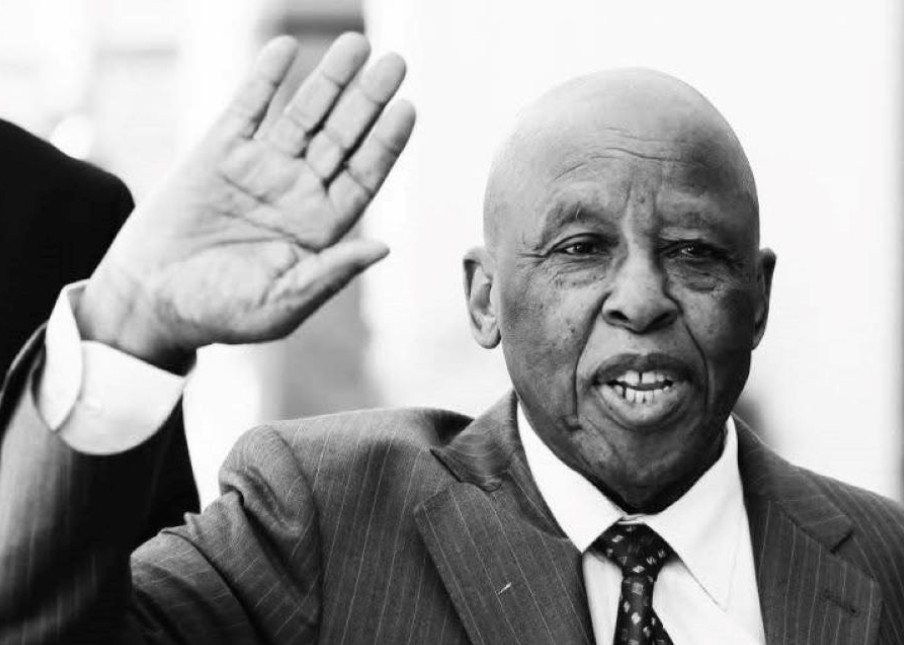
Botswana is mourning the death of former President Festus Gontebanye Mogae, a statesman remembered not only for leading his country with discipline and calm, but also for standing at the forefront of one of Africa’s bravest public-health battles. Mogae died on 8 May 2026 at the age of 86, closing a life of public service that stretched from the civil service to the presidency and later to continental statesmanship. President Duma Boko, in a moving national address, described Mogae as a “giant fallen oak” and a devoted patriot whose leadership elevated Botswana’s standing in the world. He said the former president had served the republic with honour, integrity and extraordinary diligence, and declared three days of national mourning in his memory. In another tribute, Boko said Mogae carried out the duties of office with “dignity, with finesse, with amazing humility.” Those words capture why Mogae’s death feels deeply personal to many Batswana. He was not a flamboyant politician, nor a leader who sought attention through spectacle. His strength lay in steadiness, intellect and a quiet seriousness about national duty. As Botswana’s third president, serving from 1998 to 2008, he inherited a country confronting a devastating HIV and AIDS crisis and chose not to look away. Instead, he made the epidemic a defining national priority. Under his leadership, Botswana launched free public access to antiretroviral treatment in 2002, one of the earliest and most ambitious programmes of its kind in Africa. Mogae spoke openly about the epidemic when stigma remained powerful and denial still cost lives elsewhere. UNAIDS later credited him with championing an inclusive HIV response built around treatment, fighting stigma and ending discrimination. His courage helped alter the country’s trajectory and saved countless families from despair. Mogae was also an economist and institution-builder. Before becoming president, he served as governor of the Bank of Botswana, finance minister and vice president. During his decade in office, he was widely recognised for prudent economic management, democratic continuity and a peaceful transfer of power at the end of his constitutional term. In 2008, he received the Ibrahim Prize for Achievement in African Leadership, honoured for safeguarding Botswana’s stability and prosperity during a period of national vulnerability. Yet beyond awards and offices, Mogae’s legacy is rooted in human impact; the patients who lived longer because treatment reached them; the families who saw leadership speak truthfully about fear and illness; the citizens who watched a president leave office without clinging to power. He embodied a form of African leadership that was firm without arrogance and dignified without distance. As Botswana prepares to lay him to rest, President Boko’s eulogy will likely endure as the nation’s collective farewell. A great tree has fallen, but its shade remains — in Botswana’s democratic traditions, in its public-health courage and in the memory of a leader who proved that integrity can be a lasting form of power.

 AfriFiles